

Jim Knapp is hardwired to figure things out for himself.
He needs to do the research.
He needs to form a plan.
And he needs to ensure a quality solution by taking physical control of the situation himself.
All of this also helps him naturally minimize risk.
And that was perfect for Jim’s nearly 60-year career as a respected and decorated helicopter pilot.
But what happens when those same strengths are put not to use in a military helicopter or on a search and rescue mission…but instead in an RV for a relaxing retirement tour of the United States?
First, it helps to understand why Jim operates the way he does.
Which means you should know that there are three parts of the mind, and the third part plays a huge role in our day-to-day existences. The three parts of the mind are cognitive (thinking), affective (feeling), and conative (doing). The conative part of the mind focused on natural, instinctive ways of taking action and creative problem-solving.
The Kolbe A™ Index measures your conative strengths across 4 Action Modes®:
Jim’s strengths in these Action Modes play a huge role in how he was able to be a successful pilot for so long, and those strengths never change.
Jim has an 8-6-1-7 Kolbe A Index result, which he learned about more in-depth from David Kolbe on the Powered by Instinct: Private Sessions podcast.
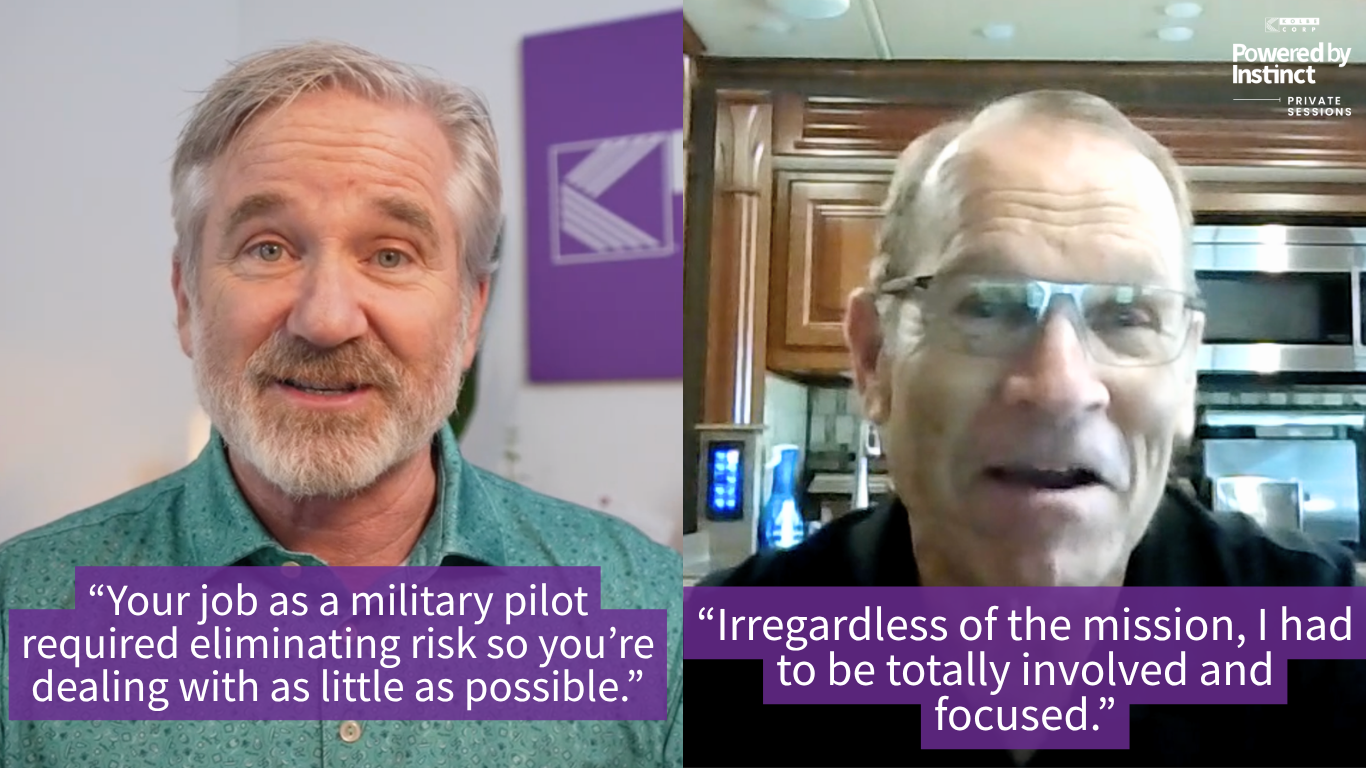
On the podcast, David explained Jim’s Natural Advantage™:
“Something that stood out to me,” he told Jim, “is your strength, what we call your Natural Advantage, in Implementor. You are a Hands-On Hero. You are the kind of person who really, you know, you need to get your hands dirty. You need to literally build, touch, construct.”
That tracked with Jim, who was a military pilot for 27 years, then an air rescue pilot on the civilian side of the house for 30 years. In those roles, he had to perform EMS, run emergency medical flights and search and rescue flights, and also operate as law enforcement. That required quality solutions that were often life and death, so Jim had to take things into his own hands to ensure successful outcomes.
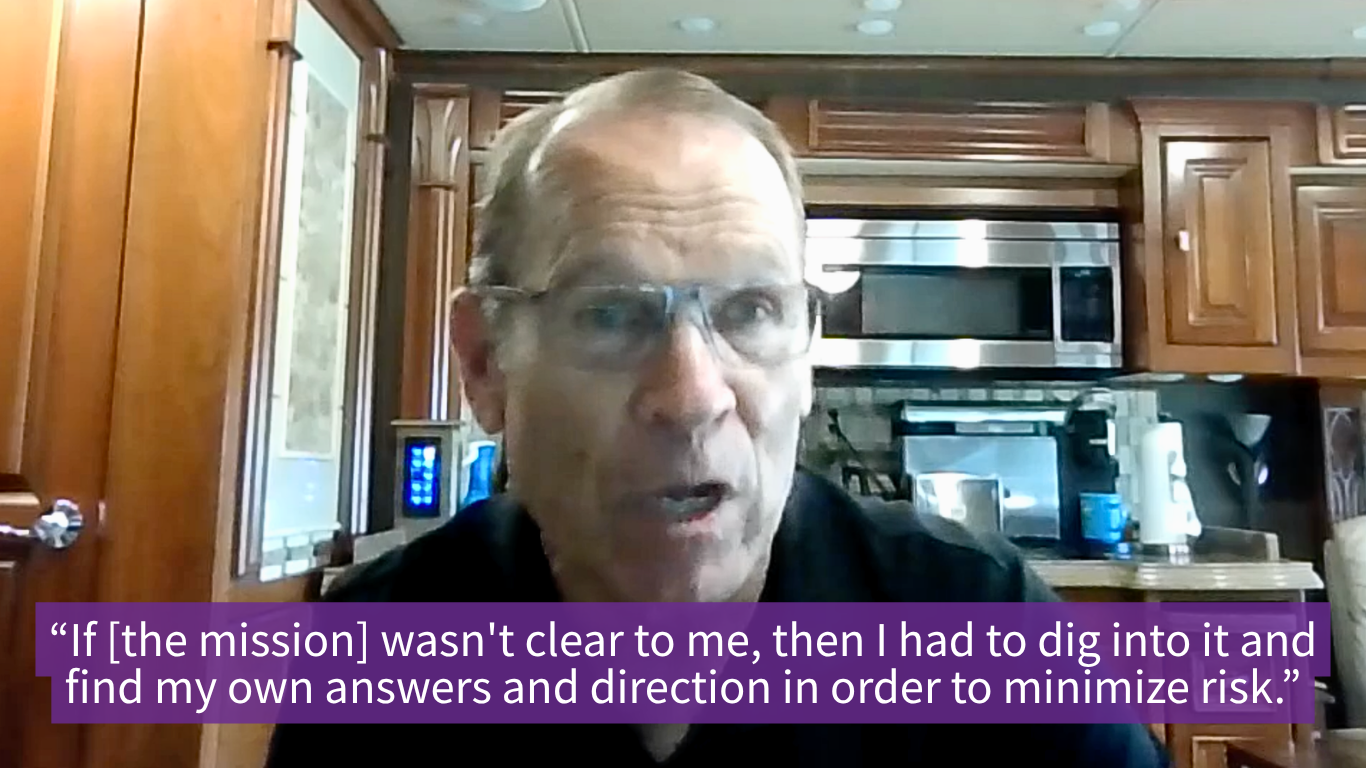
“Missions would come down from a higher authority,” he explained, “and if it wasn’t clear to me, then I had to dig into it and find my own answers and direction in order to minimize risk. You’ve got to be totally focused. I had to do it myself. I could rely on other people’s information up to a certain point, but then I had to really get into it to ensure success.”
David was quick to point out this is also due to other instinctive strengths of Jim’s.
Jim Initiates in Fact Finder, which means he starts problem-solving with his need to get information, to dig into things, to ask questions and find the answers. He is also a CounterActing Quick Start. Jim naturally brings stability. He prioritizes what works well and sticks with it. He doesn’t experiment or try new things.
This profile is very similar to the data Kolbe sees for both military and civilian pilots. Like Jim, they tend to initiate in Fact Finder and are resistant in Quick Start, as the role of a pilot requires lots of attention to detail and aversion to risk.
Jim doesn’t fly helicopters anymore. He’s retired. So instead of the air, he finds himself on the road these days, traveling the country with his wife Dana in their motorhome.
And that still requires Jim to use those same strengths.
“I would say that my biggest focus now,” Jim told David, “is the fact that we are traveling. You know, this motor home is 41 feet, and we tow a vehicle behind us that’s another 15 feet long. So I’ve got 60, 61 feet to think about when I’m going down the road and going through traffic. And of course, I still think about the weather a lot, and the road conditions. So I’m still using a lot of the same decision-making processes and looking at as many of the different variables as I can just to keep us safe while we’re going down the road. Because again, there’s only so much that I can try to control…”
“You can’t control them,” David agreed. “You’re clearly bringing that Initiating Fact Finder strength of research, data gathering, and knowing the information. I mean, just to hear your description and that you know exactly how long the RV is, ‘41 feet plus I’m towing 15 feet behind me,’ I love that you know all those things.
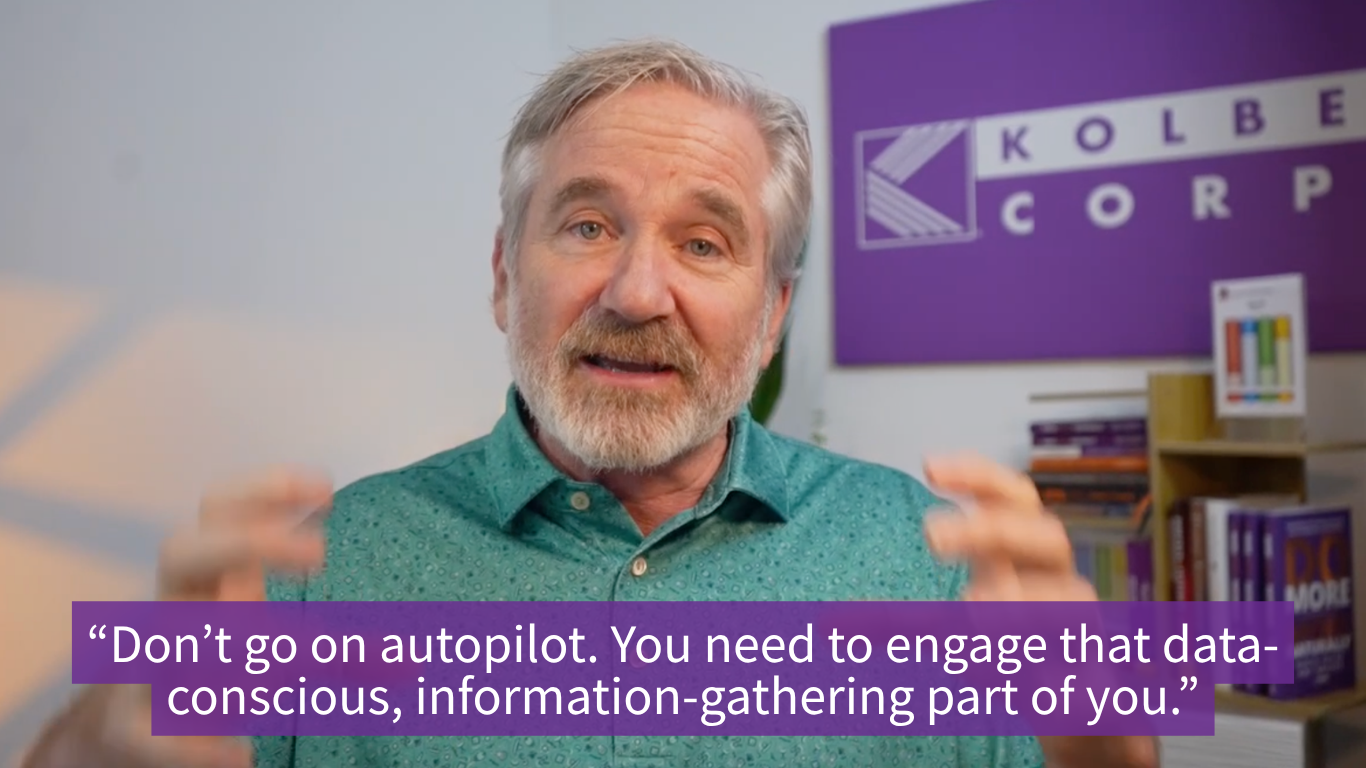
I’d encourage you to keep doing it that way. But don’t get stuck in a rut of, ‘Yeah, I don’t need to get the information and do the research because I’ve done it so many times.’ Don’t go on autopilot. You need to engage that, data-gathering, information-gathering part of you.”
How do you operate at your best? Take the Kolbe A Index to find out!


