


Every morning, even on the weekends, the alarm clock goes off at 5:00 AM.
Cameron heads out to swim. He grabs his Garmin so he can log his distance, his speed, and the currents. It’s like clockwork. Between the ocean and the pool, he swims about eighteen miles every week.
Cameron thrives on routines. He needs to get the facts and then build a plan.
It’s how he became an accomplished swimmer, and it’s how he built a career in guest operations at theme parks and water parks in Chicago, Philadelphia and Cleveland.
But now, Cameron is between careers, and so that structure which naturally comes with a job is not only missing, it’s been replaced by a job-hunting process defined by its unpredictability.
How does someone who needs structure cope when life makes other plans?

To understand the challenges facing Cameron and how he must navigate them, it first helps to know that there are three parts of the mind: cognitive (thinking), affective (feeling), and conative (doing). The conative part of the mind focused on natural, instinctive ways of taking action and creative problem-solving.
The Kolbe A™ measures your conative strengths across 4 Action Modes®:
That third Action Mode, Quick Start, runs the spectrum from those who naturally brainstorm ideas and experiment to those who instinctively protect the status quo and mitigate risk.
Cameron is the latter.
Cameron possesses an 8-7-2-3 Kolbe A™ Index result and the Natural Advantage™ that comes with it, Chaos Controller, which he learned about more in-depth from David Kolbe on the Powered by Instinct: Private Sessions podcast.
Cameron has had to do a lot of things outside his comfort zone while searching for a job. Whether cold calling, cold texting, cold emailing, or simply putting himself in front of a hiring manager without introduction, he has had to challenge himself to be uncomfortable.
But David warned him not to lose focus of how he operates at his best.
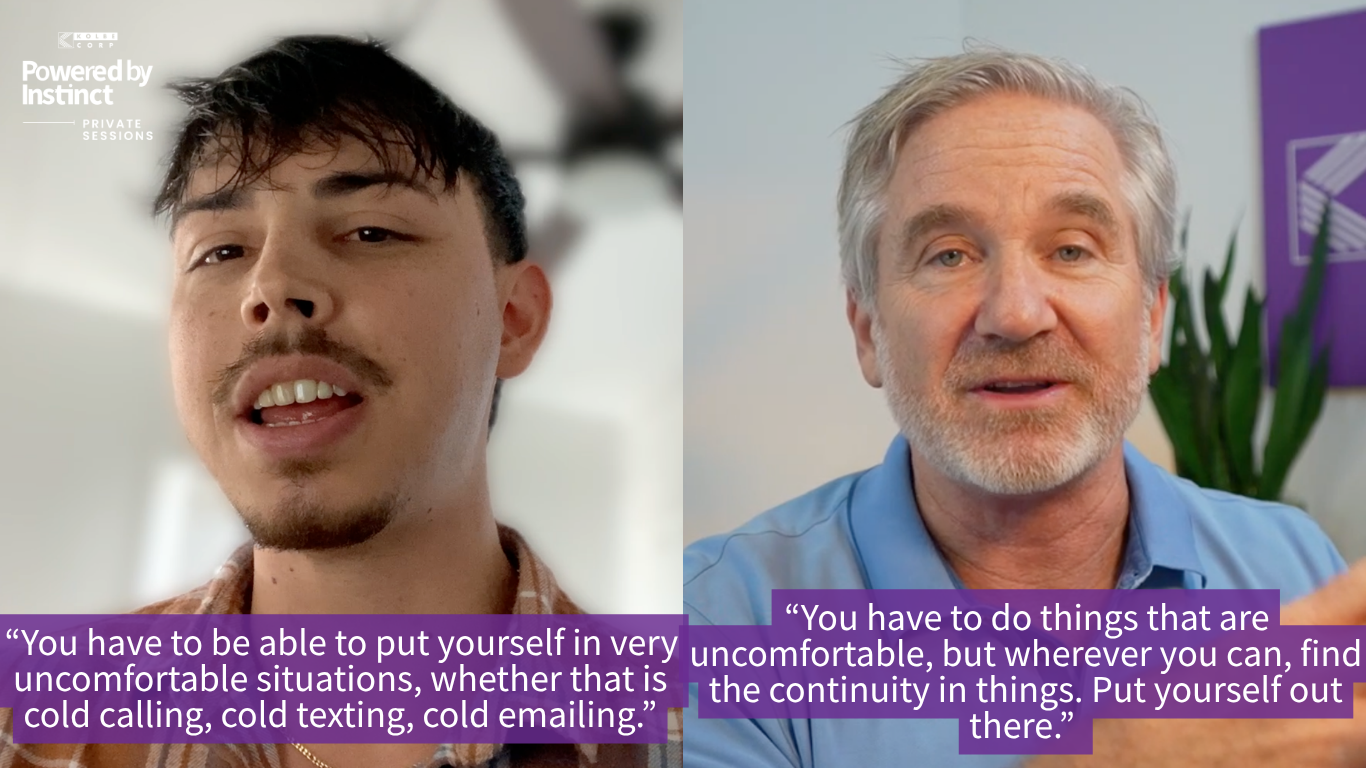
“Yes, you have to do things that are uncomfortable,” he explained, “but wherever you can, find the continuity in things. It’s a stressful time for anybody, but with your Kolbe result, but I think it’s even more stressful for you than the average person because you’re what we call a Chaos Controller. So you stick with what you know works really well. You prevent chaos from happening, and you’re also a person who creates systems and structure and operates most naturally kind of within a plan or a system. And when you are in between what you want to be doing as a career, that can be extra frustrating for you because it’s like, what’s the plan? What’s the system? What’s the structure?”
David also outlined several ways Cameron can lean into his strengths to get him through unpredictable times.
First, there’s a common piece of advice he should generally ignore:
Don’t overthink it.
For someone like Cam, who thrives while reviewing information and doing research, he should continue to think things through thoroughly.
“I know there are times when, yes, it can become a bad loop where you really, truly overthink it,” David offered, “But in terms of looking at information and doing research, just keep doing that.”
Another piece of advice? Just go for it. Just put yourself out there. BUT…
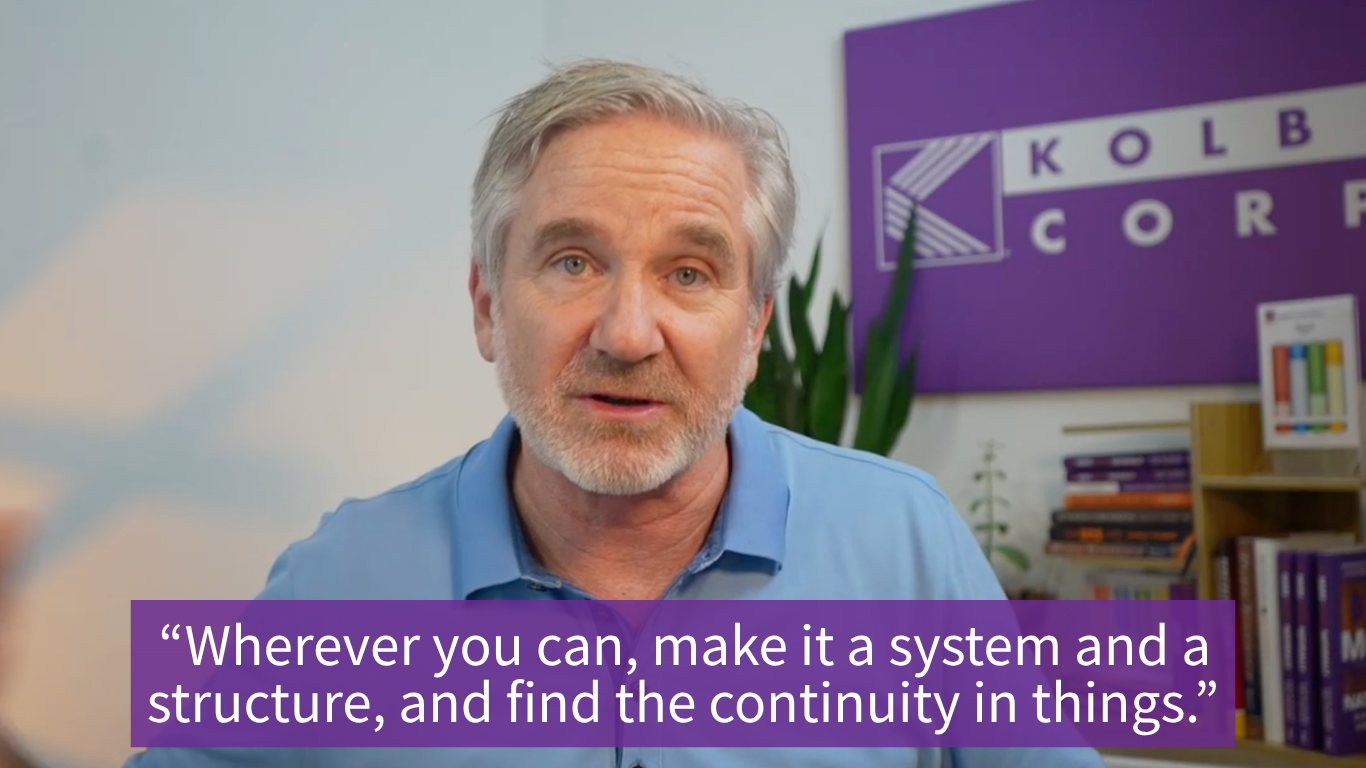
“Wherever you can, make it a system and a structure, and find the continuity in things. Allow yourself to be that Chaos Controller Natural Advantage where your strength is to find what’s working and stick with it. Yes, you’re putting yourself out there in novel situations and with new people, but find the connections. If you’ve got the plan and the schedule, stick with it.”
Another thing that can help someone like Cameron is deadlines.
“Deadlines can be a good motivator for almost anybody,” David said. “With your Quick Start and your Follow Thru, there are subtle differences. A last-minute push is not as helpful for you. So when you can control it, give yourself more time. Yeah, it’s a hard deadline, but it’s three days from now, so you’ve got time to work through the process and get to it, and get all that stuff done. So yes, a deadline is good, but for you it’s that planned, systematic, structured deadline.”


