Chances are, that’s not a high number.
We’ve all been told to do things a certain way, even though it ends up disappointing us almost every time.
You know the drill:
The day planner that was going to FINALLY get you organized, only to sit completely empty for 11 months of the year.
The gym membership that you paid for months without going to the gym a single day past February.
But there’s good news. Resolutions don’t need to be hard; they don’t need to be painful. In fact, they shouldn’t be. Because, here’s the thing:
You’ve heard the stats before:
Only 9% of Americans that make resolutions complete them.
23% of people quit their resolution by the end of the first week.
43% quit by the end of January.
Why does this happen?
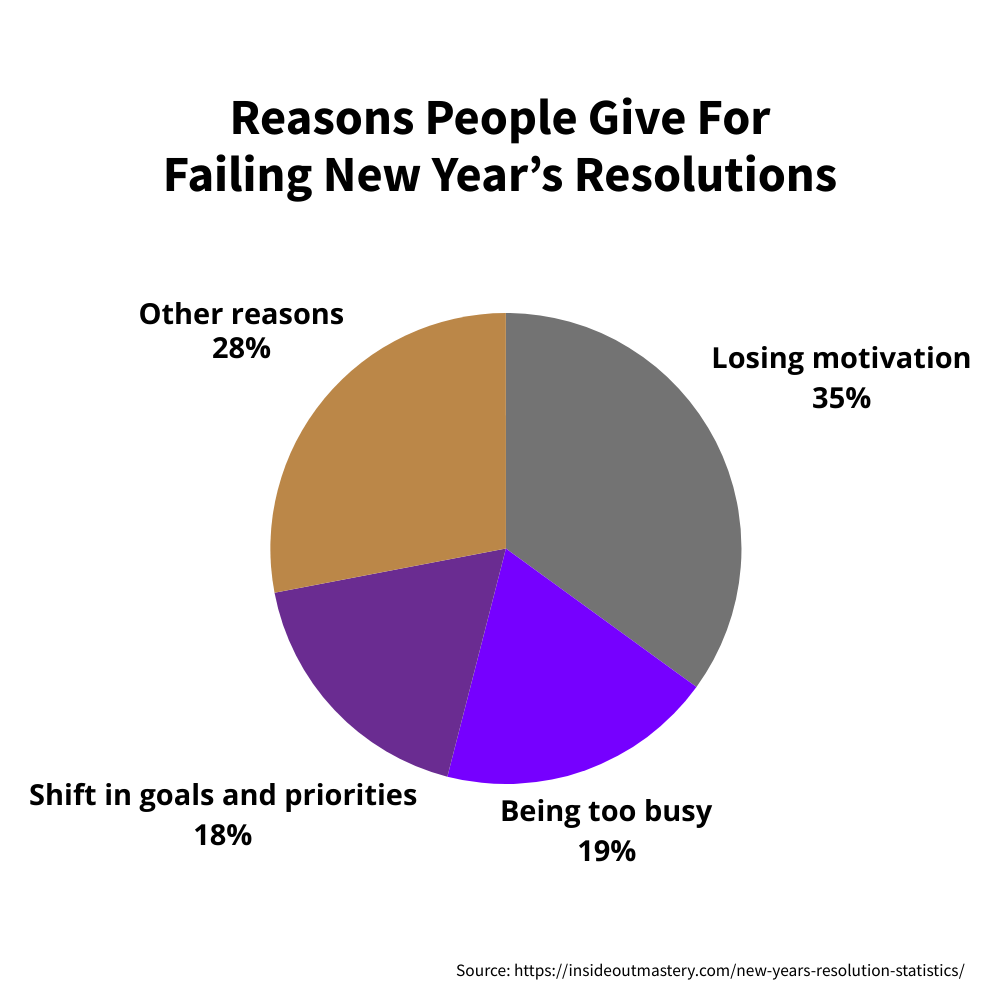
Most people blame it on a lack of motivation or being too busy. But that’s because the most common reason is all too easy too overlook.
When you work against your natural ways of taking action, any project becomes unsustainable.
It’s like writing with the wrong hand. No matter how hard you work at it, you’ll never write as neatly, efficiently, or effectively with your left hand if you’re right-handed.
So of course you’ll eventually lose motivation, or feel too busy, or change goals…because it takes so much time and energy to do things in a way that is not natural to you.
Why are you punishing yourself with resolutions that you’ll never be able to sustain? Instead of forcing a plan that has never worked in the past and likely will never work in the future, pivot to your natural way of solving problems when setting goals.
If that sounds a little too easy, it might be because you’ve become too comfortable making things harder than they need to be.
Remember the following when making goals for next year:
Most resolutions fail because the approach works against how someone naturally takes action. People set themselves up for failure by listening to well-intentioned advice from others when setting their goals instead of trusting their gut.
Keep this at the forefront of your mind when making your resolutions for 2026: Your instinctive strengths don’t change over time. How you choose to use them…absolutely does!
In order to use your instinctive strengths to improve your life, you need to find clarity on what your strengths are.
The best way to do that? Make it your resolution to get clear on what your instinctive strengths are.
Take the Kolbe A™ Index and discover your MO.