


It’s easy to pigeonhole certain professions into a pre-imagined set of strengths.
People assume all founders are brainstorming risk-takers, or that all surgeons are hands-on types, or all financial planners are natural…well…planners.
But sometimes, a unique set of strengths can help the right professional thrive in a profession that may seem like an odd fit.
It’s all about understanding those strengths and using them in a way that works for you and your clients.
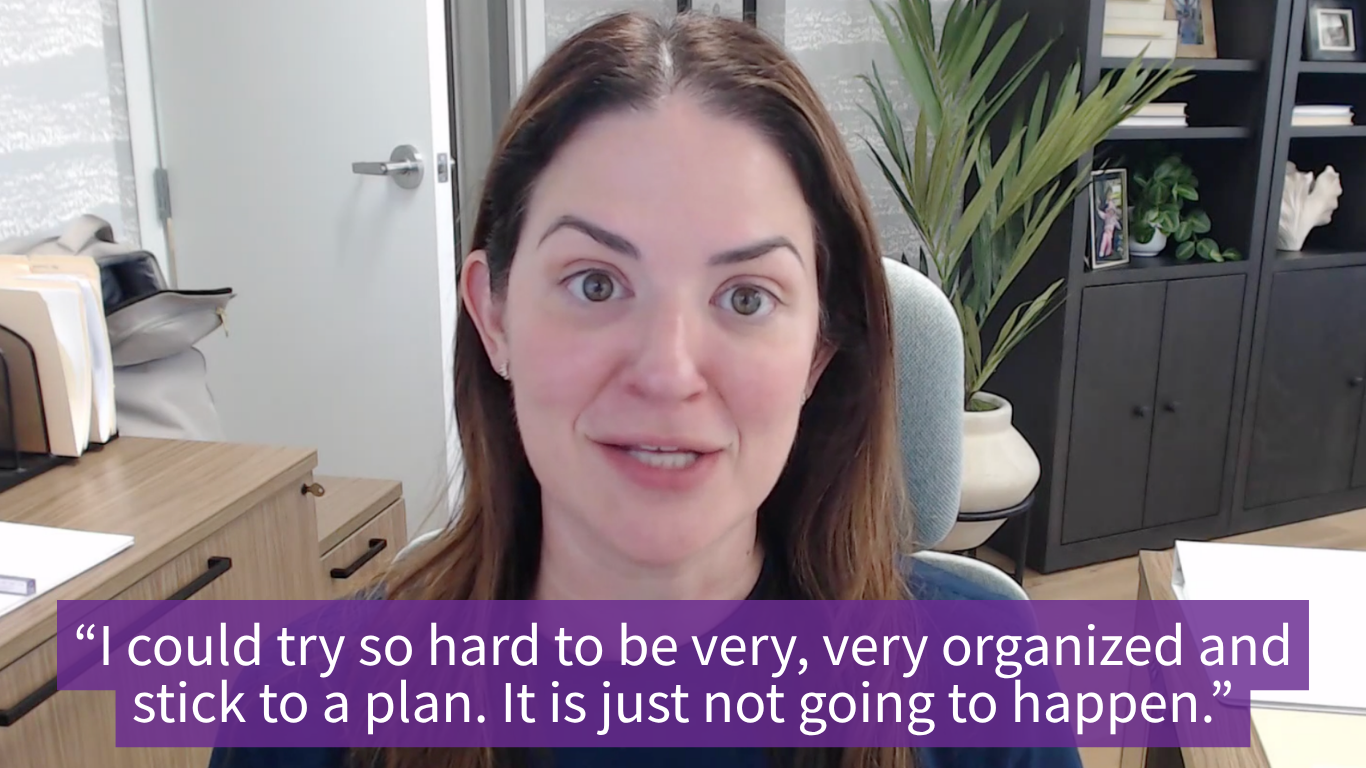
Alexandra Demosthenes is an accountant and financial planner who’s a partner at a wealth management firm. She works in a profession built traditionally on systems and checklists, and that is just not how she naturally operates.
So how does a CPA who won’t stick to a set plan build financial plans for a living?
To understand the situation, it first helps to know that there are three parts of the mind: cognitive (thinking), affective (feeling), and conative (doing). The conative part of the mind focused on natural, instinctive ways of taking action and creative problem-solving.
The Kolbe A™ measures your conative strengths across 4 Action Modes®:
That second Action Mode, Follow Thru, runs the spectrum from those who naturally create systems and make plans for everything to those who instinctively resist planning and who problem solve not by using systems, but by adapting.
Alex is very much the latter.
This was confirmed with her 7-3-7-3 Kolbe A™ Index result and the Natural Advantage™ that comes with it, Multitasking Hero, which she learned about more in-depth from David Kolbe on the Powered by Instinct: Private Sessions podcast.
Alex has been told her whole life that she starts a hundred things and never finishes any of them. When they were dating, her husband took one look at a corner of the house and named it Hobby Corner.
And it works for her. Even as a financial planner. Because she turns her strengths into a client strategy. The people who will never track every dollar in a spreadsheet are exactly the clients her more systematic peers turn away, and she is built to serve them.
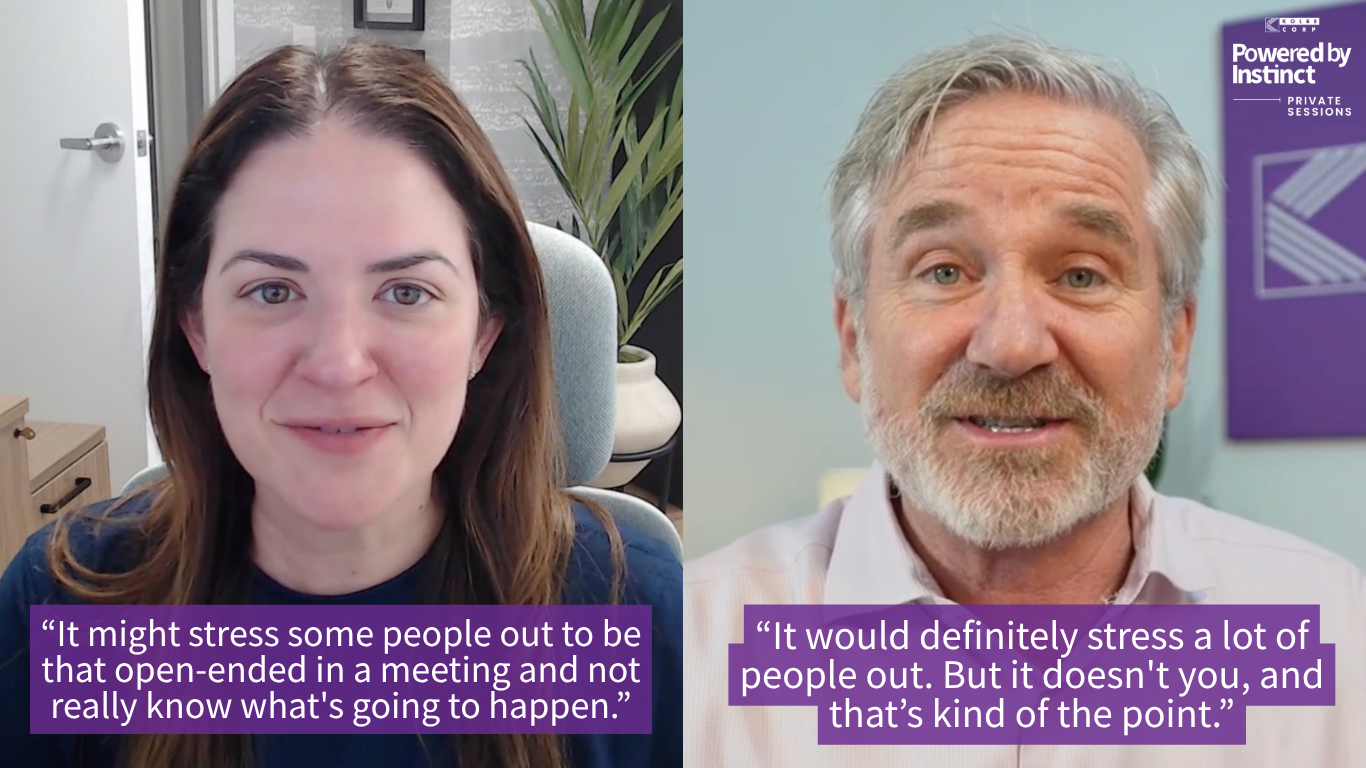
“I could try so hard to be very, very organized and stick to a plan,” she told David. “It is just not gonna happen. Just knowing that and saying, ‘Well, actually I’m really good at being very adaptable’ is helpful. You could throw all sorts of things at me, and I’m not having any problem with that whatsoever. It’s key not having to put myself and push myself so far into something that is just so counterintuitive for me to operate that way.”
“I love that you know that,” David responded, “and I love that you have the confidence to understand it is just who you are, and that you will make that work.”
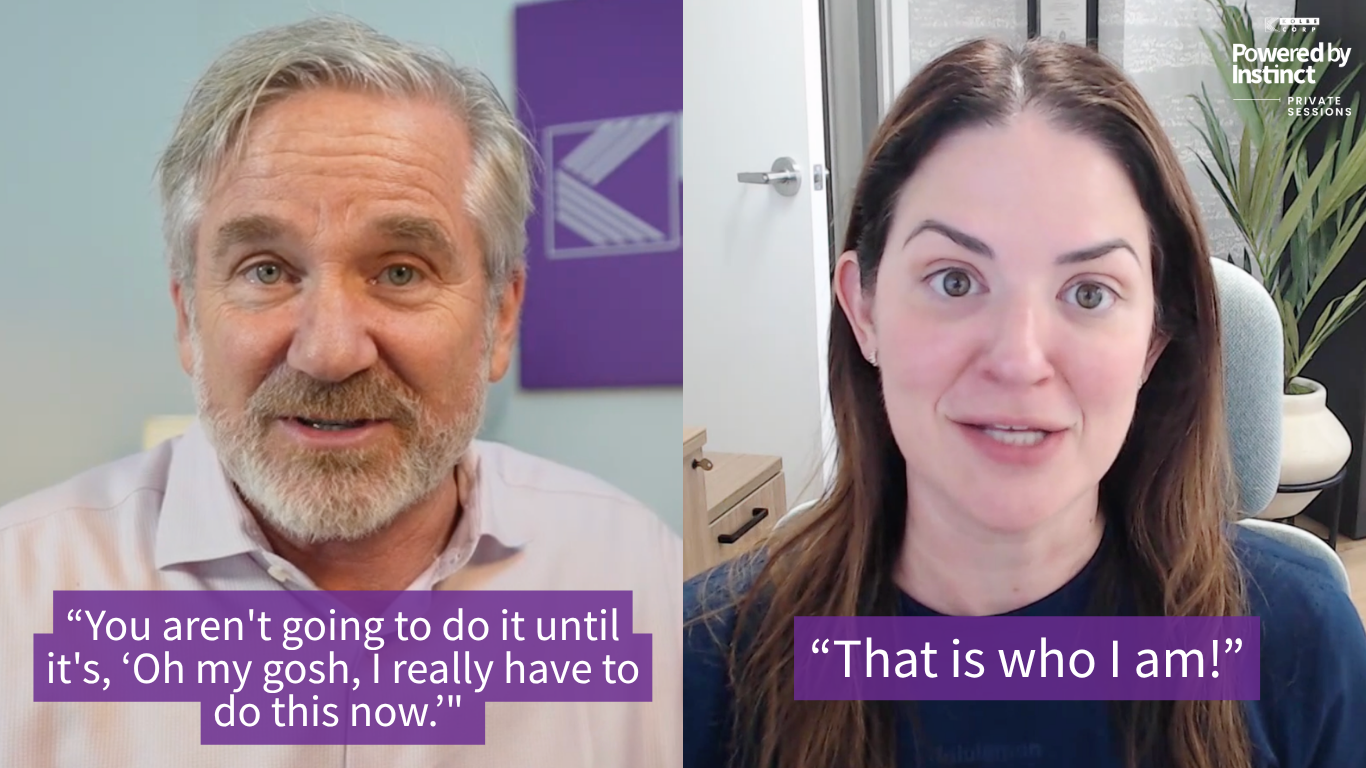
David pointed out that while an unconventional approach could cause some issues in theory, those are very fixable.
“And in the meantime,” he added. “You’re different than those other people. So when you think about getting clients, you can get clients that maybe other people are unlikely to get because you will appeal to those people who are maybe also not so systematic and structured, and you can say, ‘Hey, I know you need that with some of your financial life, and I’ll help you do that. But I also understand you’re never going to be that super organized and structured person, and that’s okay.’”
“A lot of peers of mine, when they’re working with new clients, they have a lot of intake and a lot of exercises that they have people do,” Alex confirmed. “They want them to track all their spending, and I’m like, ‘No. First of all, I don’t want to look at everybody’s spending.’ I’m more of like, ‘Okay, I don’t care what you spend it on. Your spending is your spending.’ I ask what’s going to give the highest impact instead of waiting on them to do a crazy spreadsheet they would never actually do. It allows me to meet them where they’re at.”


